

Product
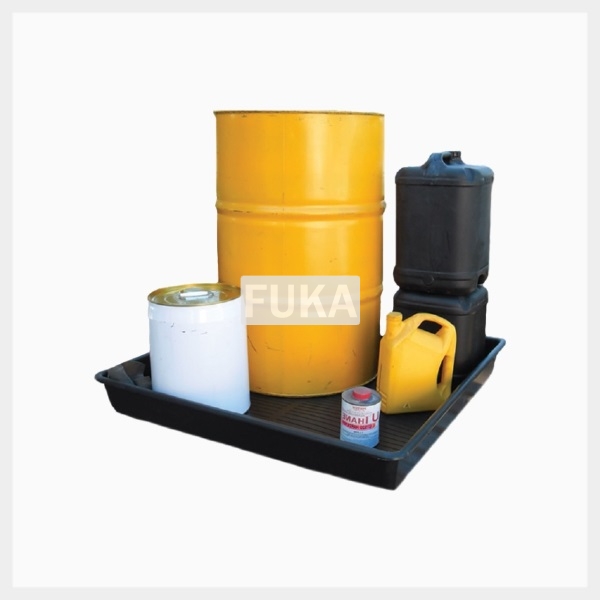
Spill Tray
Spill Tray – Reliable Secondary Containment for Hazardous Liquids
A spill tray is an essential safety solution designed to contain leaks, drips, and accidental spills from drums, containers, jerry cans, and chemical storage equipment. It provides effective secondary containment, helping businesses prevent environmental contamination, workplace hazards, and costly cleanup operations.
Please call/SMS/whatsapp
*******Free Quotation*******
017-641 2290
Spill Tray: The Complete Guide to Secondary Containment for Safer Workplaces
Spill trays are one of the simplest and most effective tools for preventing liquid leaks from becoming environmental incidents, safety hazards, or expensive cleanup projects. Whether your business stores oils, chemicals, fuels, lubricants, paints, or other liquids, a properly selected spill tray can provide reliable secondary containment and help maintain a cleaner, safer workplace.
In this guide, you'll learn what a spill tray is, how it works, where it is used, how to choose the right size, and why it is an essential component of modern industrial safety management.

What Is a Spill Tray?
A spill tray is a containment tray designed to capture leaks, drips, and minor spills from containers, drums, machinery, and dispensing equipment. It acts as a secondary barrier that prevents liquids from reaching the floor, drains, soil, or surrounding work areas.
Most industrial spill trays are manufactured from high-density polyethylene (HDPE) or other chemical-resistant plastics. These materials are lightweight, durable, corrosion-resistant, and suitable for a wide range of hazardous and non-hazardous liquids.
Typical spill tray features
-
Seamless construction
Reduces the risk of leakage through joints or welds.
-
Chemical resistance
Compatible with many oils, fuels, solvents, and chemicals.
-
Low-profile design
Easy to place under containers, machinery, or workstations.
-
Durable load capacity
Supports drums, jerry cans, pails, and other containers.
-
Easy cleaning
Smooth surfaces simplify maintenance and spill recovery.
Why Spill Trays Are Important
Even small leaks can create significant problems over time. A few drops of oil or chemical released repeatedly can contaminate floors, create slip hazards, damage equipment, and increase cleanup costs. Spill trays provide a proactive solution.
Key benefits
-
Prevent environmental contamination
Spill trays capture liquids before they enter drains, waterways, or soil.
-
Improve workplace safety
Containing leaks reduces slip-and-fall risks and keeps work areas cleaner.
-
Support regulatory compliance
Many industries require secondary containment for hazardous liquids. Spill trays help demonstrate responsible storage practices.
-
Reduce cleanup costs
Cleaning a contained spill is far easier and less expensive than cleaning a large floor or outdoor area.
-
Protect equipment and infrastructure
Leaked chemicals or oils can damage flooring, coatings, and nearby equipment. Containment helps minimize this risk.
Common Applications of Spill Trays

Spill trays are used across many industries because liquid leaks are a common operational challenge.
Industrial and manufacturing facilities
Factories often use spill trays beneath hydraulic equipment, pumps, compressors, and chemical containers to capture routine drips and maintenance-related spills.
Warehouses and logistics centers
Warehouses storing oils, lubricants, cleaning chemicals, or fuels frequently place spill trays under drums, jerry cans, and dispensing stations.
Automotive workshops
Workshops use spill trays to contain engine oil, transmission fluid, coolant, brake fluid, and fuel leaks during servicing operations.
Laboratories
Laboratories use smaller spill trays beneath chemical bottles and containers to prevent accidental releases from spreading across work surfaces.
Marine and offshore operations
Spill trays are commonly used around fuel systems, lubricants, and maintenance areas where environmental protection is critical.
Food and beverage facilities
In some applications, spill trays help contain oils, cleaning agents, and process liquids while supporting housekeeping standards.
Types of Spill Trays
Low-profile spill trays
Designed for easy access and placement under equipment. Ideal for capturing routine drips and small leaks.
Drum spill trays
Built to support the weight of drums and provide larger containment capacity for storage applications.
Chemical spill trays
Manufactured from materials with enhanced chemical resistance for aggressive substances.
Heavy-duty spill trays
Designed for higher load capacities and demanding industrial environments.
Portable spill trays
Lightweight and easy to move, making them suitable for temporary containment during maintenance or transfer operations.
How to Choose the Right Spill Tray
Selecting the correct spill tray is important for safety, performance, and compliance.
1. Identify the liquid
Determine whether you are containing oil, fuel, solvents, acids, alkalis, or other chemicals. Check compatibility between the liquid and the tray material.
2. Determine container size and weight
Ensure the tray can safely support the containers placed on it. A tray used for a 200-liter drum requires a much higher load capacity than one used for a 5-liter jerry can.
3. Calculate containment capacity
Consider the maximum amount of liquid that could leak from the primary container. Larger storage applications may require higher-capacity containment systems.
4. Consider the installation location
Indoor and outdoor environments may have different requirements. Outdoor applications should account for rainwater, UV exposure, and temperature variations.
5. Evaluate chemical resistance
Not all plastics are compatible with all chemicals. Review manufacturer compatibility data for aggressive substances.
6. Check regulatory requirements
Some industries have specific containment requirements. Verify local environmental and workplace safety regulations applicable to your operation.
Spill Tray vs. Spill Pallet
These products serve similar purposes but are designed for different scales of containment.
|
Feature |
Spill Tray |
Spill Pallet |
|
Primary use |
Small to medium containment |
Large drum and bulk storage containment |
|
Profile |
Low and compact |
Taller with larger sump capacity |
|
Typical applications |
Machinery, small containers, dispensing stations |
Multiple drums, IBCs, bulk chemical storage |
|
Load capacity |
Moderate |
High |
|
Portability |
Generally easier to move |
Usually larger and heavier |
For routine drip control and small-container storage, a spill tray is often sufficient. For multiple drums or bulk storage, a spill pallet may be more appropriate.
Best Practices for Using Spill Trays
Position trays correctly
Place trays directly beneath potential leak points, including drum taps, pumps, hoses, valves, and machinery components.
Inspect regularly
Check for accumulated liquid, damage, cracks, or chemical attack. Regular inspection helps ensure continued effectiveness.
Empty collected liquids promptly
Do not allow trays to overflow. Dispose of recovered liquids according to local environmental regulations.
Keep trays clean
Remove sludge, dirt, and debris that may reduce containment capacity or complicate spill response.
Train personnel
Employees should understand why spill trays are used and how to maintain them properly.
Maintenance and Inspection
A spill tray is a relatively low-maintenance product, but regular checks are still important.
Inspection checklist
-
Check for cracks, punctures, or deformation.
-
Verify that the tray remains level and stable.
-
Confirm that chemical exposure has not degraded the material.
-
Remove accumulated liquids and debris.
-
Inspect surrounding equipment for the source of leaks.
If a tray shows signs of damage or significant chemical degradation, replace it promptly to maintain reliable containment.
Environmental and Safety Considerations
Spill trays are an important part of a broader spill prevention strategy. They should be used alongside proper storage procedures, spill response kits, employee training, and regular equipment maintenance.
For hazardous chemicals, always consult the Safety Data Sheet (SDS) to understand compatibility, handling requirements, and emergency response procedures.
Key takeaway
Spill trays are one layer of protection. Pair them with spill kits, SOPs, training, inspections, and maintenance for a complete spill prevention program.
Why Businesses Invest in Spill Trays
Compared with the cost of environmental cleanup, damaged inventory, regulatory penalties, or workplace accidents, spill trays are typically a very economical investment. They provide immediate, visible containment and help organizations demonstrate a proactive approach to safety and environmental protection.
For businesses handling liquids daily, spill trays can become a standard part of operational housekeeping. By containing small leaks before they become larger problems, they help reduce risk, improve cleanliness, and support more efficient maintenance practices.